34: Motion as Medicine - Vestibular Input and Nervous System Regulation 🎾
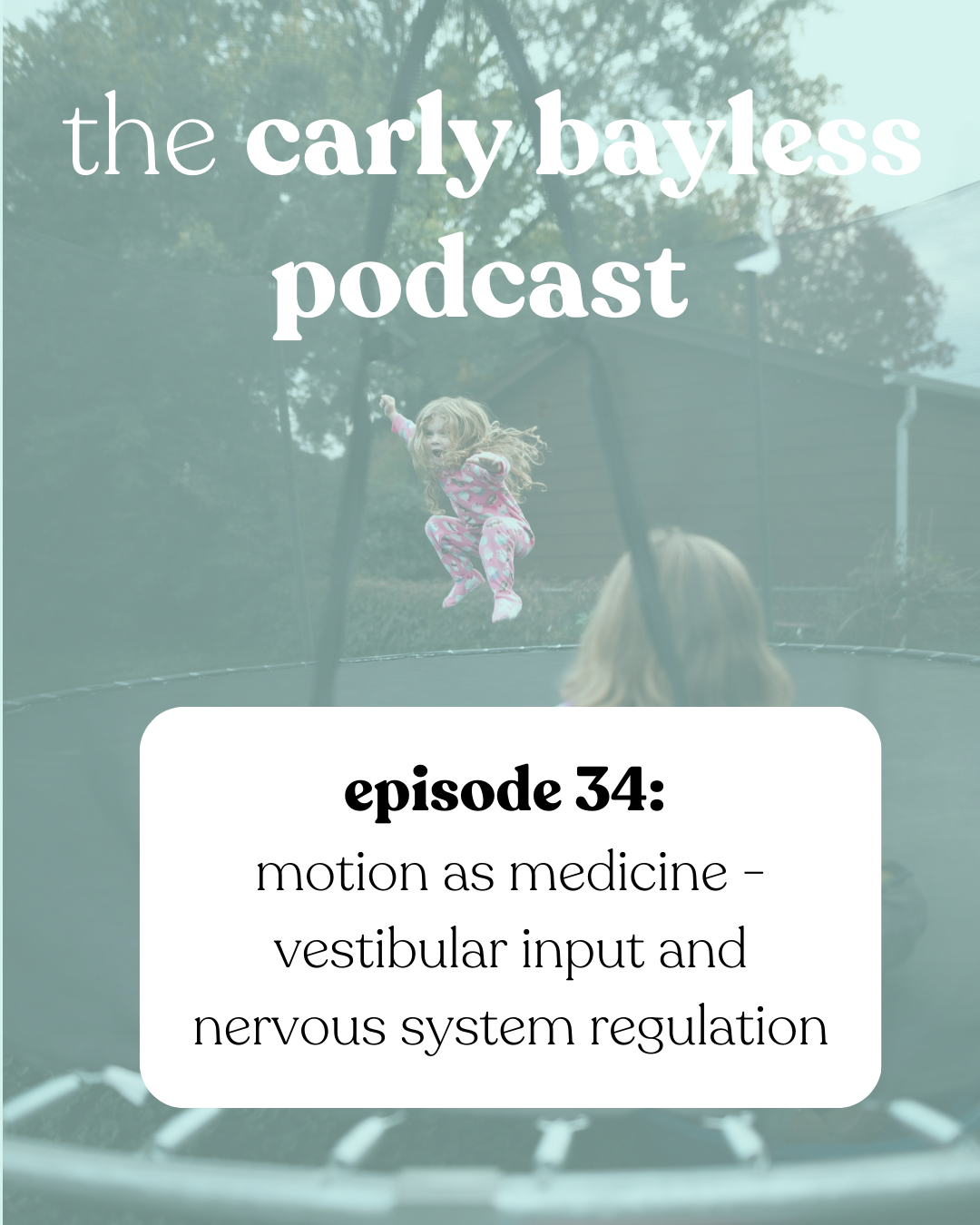
🤔 Ever wondered… Why does walking calm anxiety?
Why do babies settle when we move? And why does stillness sometimes feel worse than motion?
In this episode, I discuss the science of the vestibular system - a foundational sensory system that plays a powerful role in nervous system regulation, emotional safety, sleep, and stress resilience.
Grounded in neuroscience, sensory-integration research, and trauma-informed physiology, this conversation explores how rhythmic, predictable motion helps signal safety to the brain - for babies, kids, and adults alike.
You’ll learn why movement isn’t a sleep crutch or a bad habit, but biological nourishment, and how to practically incorporate vestibular input into everyday life in gentle, intuitive ways.
🎧 In This Episode, We Cover:
What the vestibular system is and why it’s a primary sensory system
How vestibular input communicates with the brainstem, vagus nerve, and autonomic nervous system
Why rhythmic, linear, forward motion is especially regulating
How forward movement is associated with reduced amygdala reactivity and threat signaling
The role of motion in infant brain development and sensory integration
Why movement helps regulate sleep, mood, anxiety, and stress
Practical vestibular movement ideas for:
babies & toddlers
older kids
adults (especially postpartum moms)
When motion can feel dysregulating — and how to approach it gently
How I am personally experimenting with movement, including stroller walks, varied movement with the twins, and gentle rebounding
💛 RESOURCES & LINKS
Learn more about Nurture Functional Medicine
Follow NFM (@nurturefunctionalmedicine) and Carly on Instagram (@carlybaylesswellness)
🙋♀️ WANT HELP?
We’d love to support you. Schedule a free discovery call with us at Nurture Functional Medicine.